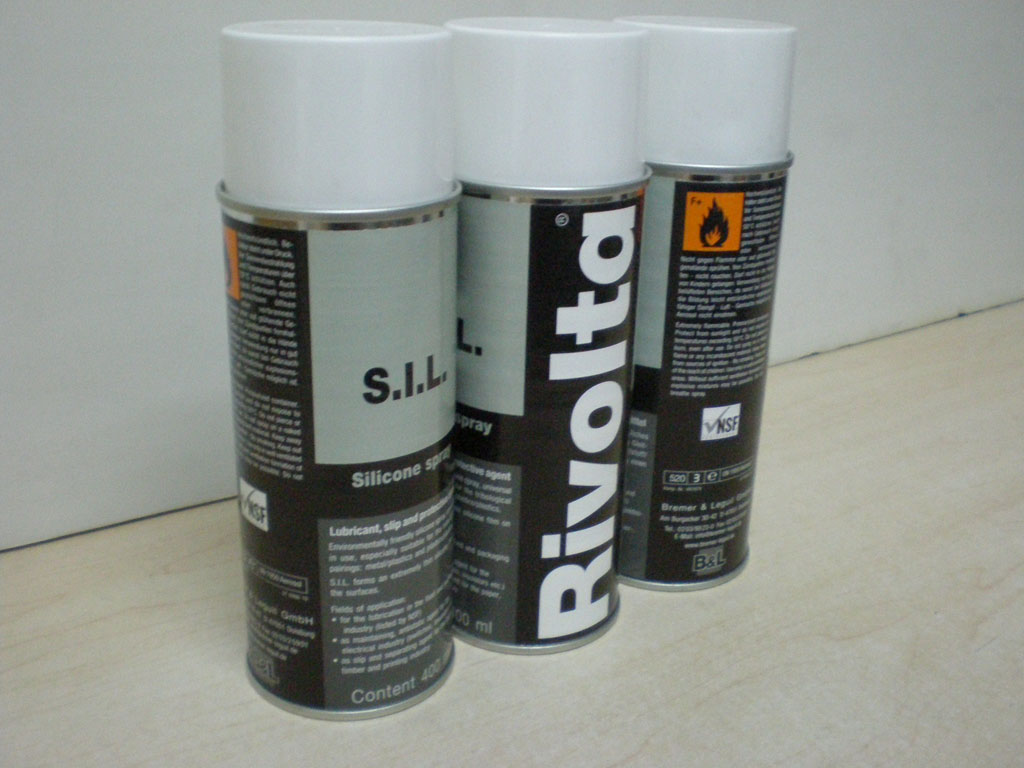
| in the food and packaging industry: |
as slip and separating agent for conveyor belts, chutes, guides, etc.
| |
| in the electrical industry: |
as protection for insulation surfaces, e.g. porcelain insulators, cut-off wheels made of plastics.
| |
| in the plastics-processing industry: |
as separating agent for thermoplastics and thermosets except silicone-caoutchouc.
| |
|
in the paper, cardboard packaging, timber and printing industry:
|
as lubricant e.g. for guides, cutting edges, etc. | |
| Other: | prevents the adhesion of rubber sealings(windows, car doors etc.), lubricates zips, etc. |
|
physiologically harmless, approved as per NSF-H1-guidelines:
|
the strict demands to food hygiene will be kept. Requirements of a quality assurance system will be fulfilled. | |
|
high dielectric strength of the silicone oil: > 150 kV/cm:
|
the insulation values of the treated parts remain unchanged. No danger of creeping currents. | |
| wide operative temperature range of the silicone oil: -50° up to +250°C: | usable in many application areas. |



 |
|||||||||||||||
|